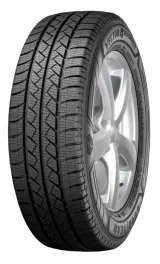
Tests – · none yet Owners 75 · 63 reviews
Head-to-head
Updated
Goodyear Vector 4Seasons vs Michelin Energy Saver — Compared
Relative Score (0–100): the weighted average of the categories below, each 60% road tests and 40% owner reviews (comfort 40/60). Based on 0 + 1 road tests and 63 + 137 owner reviews. How we score
Vector 4Seasons is ahead, 74–69
Add your size for an exact match
/R
Both Amazon links then search this exact size.
TireWheelGuide may earn a commission from purchases made through these links.
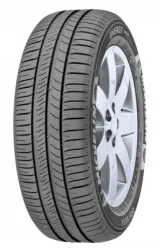
Tests 71 · 1 test Owners 69 · 137 reviews
Best test result: #2 of 20 in 2018 Auto Bild 15 inch Summer Tyre Test (wear)
Category by category
Relative Score per category, 0–100. Open “Why this score” for the tests and owner ratings behind it.
-
71
Dry
Vector 4Seasons +269Why this score
Source Vector 4Seasons Energy Saver Professional tests (TWG score) · – / 1 tests ≈ 70 (est.) 71 Reviews found online 73 67 Vector 4Seasons: 60% × 70 (est.) + 40% × 72.9 = 71
Energy Saver: 60% × 70.6 + 40% × 67.1 = 69
No road tests of dry for Vector 4Seasons. The test half is estimated from the owner ratings, as far as owners and testers agree (correlation 0.41).
-
77
Wet
Vector 4Seasons +968Why this score
Source Vector 4Seasons Energy Saver Professional tests (TWG score) · – / 1 tests ≈ 75 (est.) 69 Reviews found online 79 67 Vector 4Seasons: 60% × 75.1 (est.) + 40% × 78.7 = 77
Energy Saver: 60% × 69.2 + 40% × 66.5 = 68
No road tests of wet for Vector 4Seasons. The test half is estimated from the owner ratings, as far as owners and testers agree (correlation 0.55).
-
69
Snow
No comparison–Why this score
Source Vector 4Seasons Energy Saver Professional tests (TWG score) ≈ 70 (est.) – Reviews found online 68 – Vector 4Seasons: 60% × 69.8 (est.) + 40% × 68.4 = 69
No road tests of snow for Vector 4Seasons. The test half is estimated from the owner ratings, as far as owners and testers agree (correlation 0.32).
-
72
Comfort
Vector 4Seasons +468Why this score
Source Vector 4Seasons Energy Saver Professional tests (TWG score) ≈ 70 (est.) ≈ 68 (est.) Reviews found online 73 67 Vector 4Seasons: 40% × 69.5 (est.) + 60% × 73 = 72
Energy Saver: 40% × 68.4 (est.) + 60% × 67.3 = 68
No road tests of comfort for Vector 4Seasons or Energy Saver. The test half is the tested tires’ average (69): owners’ comfort ratings barely follow the road tests.
-
–
Noise
No comparison70Why this score
Source Vector 4Seasons Energy Saver Professional tests (TWG score) · – / 1 tests – 72 Reviews found online – ≈ 66 (est.) Energy Saver: 60% × 72.1 + 40% × 66.4 (est.) = 70
No owner ratings of noise for Energy Saver. The owner half is the owners’ average (66): owners’ noise ratings barely follow the road tests, so the tests say nothing about how owners would rate it.
-
72
Treadwear
Energy Saver +274Why this score
Source Vector 4Seasons Energy Saver Professional tests (TWG score) · – / 1 tests ≈ 70 (est.) 74 Reviews found online 76 74 Vector 4Seasons: 60% × 69.8 (est.) + 40% × 75.6 = 72
Energy Saver: 60% × 74.4 + 40% × 74.3 = 74
No road tests of treadwear for Vector 4Seasons. The test half is estimated from the owner ratings, as far as owners and testers agree (correlation 0.36).
-
76
Handling (owners)
Vector 4Seasons +1264Why this score
Source Vector 4Seasons Energy Saver Reviews found online 76 64 -
–
Efficiency
No comparison75Why this score
Source Vector 4Seasons Energy Saver Professional tests (TWG score) · – / 1 tests – 75
Scores at a glance
| Category | Goodyear Vector 4Seasons | Michelin Energy Saver |
|---|---|---|
| Relative Score | 74 | 69 |
| Dry | 71 | 69 |
| Wet | 77 | 68 |
| Snow | 69 | – |
| Comfort | 72 | 68 |
| Noise | – | 70 |
| Treadwear | 72 | 74 |
| Handling (owners) | 76 | 64 |
| Efficiency | – | 75 |
Higher is better. The Relative Score follows your weights below; category scores do not change.
Weight the categories that matter to you
Wet grip starts at “Important”. Treadwear starts at “Neutral” here: road tests measured it for at most one of the two tires, so it rests on owner reviews. Move the sliders and the scores update instantly.
Important
NotLessNeutralImportantMost
Important
NotLessNeutralImportantMost
Neutral
NotLessNeutralImportantMost
Only one of the two tires has a score here, so this weight changes nothing in the head-to-head.
Less important
NotLessNeutralImportantMost
Less important
NotLessNeutralImportantMost
Only one of the two tires has a score here, so this weight changes nothing in the head-to-head.
Neutral
NotLessNeutralImportantMost
Less important
NotLessNeutralImportantMost
Not important
NotLessNeutralImportantMost
Only one of the two tires has a score here, so this weight changes nothing in the head-to-head.
Recomputed
Headline score
74
/ 100
Vector 4Seasons
69
/ 100
Energy Saver
Only categories both tires have data for count toward the headline score.
The professional test results behind the scores
Per discipline: the average % of the best tire over every test both tires were in, and how many of those tests each one won. “Different tests” rows compare results from separate tests.
| Discipline | Category | Vector 4Seasons | Energy Saver | Δ | Head-to-head |
|---|---|---|---|---|---|
| Also published by the testers (not in the score) | |||||
| Overall Ranking | Overall | #28/51 2015 Winter Tyre Market Overview | #5/20 2018 Auto Bild 15 inch Summer Tyre Test | – | Different tests |
Pros, cons & observations
Themes extracted from owner reviews found online — not the opinion of TireWheelGuide.
Tire A Vector 4Seasons
Pros
- Exceptional traction and confidence in snow and icy conditions.
- Strong performance in heavy rain and wet road environments.
- High durability and tread life for many users.
Cons
- Increased road noise, often described as a 'humming' or 'bearing-like' sound.
- Softened handling and reduced precision during high-temperature summer months.
- Reports of premature wear or tread chunking in specific high-performance or heavy-load applications.
Tire B Energy Saver
Pros
- Exceptional tread life and long-lasting durability
- Noticeable improvements in fuel economy and low rolling resistance
- Low road noise and high levels of driving comfort
Cons
- Subpar wet-weather grip and traction, especially as the tires age
- Prone to dry rotting, cracking, and hardening after a few years
- Poor performance and sliding in cold or winter conditions
Specs side by side
| Attribute | A · Goodyear Vector 4Seasons | B · Michelin Energy Saver |
|---|---|---|
| Category | All Season | Summer |
| Vehicle type | Passenger Car / Crossover | Passenger Car / Crossover |
| Sizes available | 17 | 4 |
| Rim diameters | 14″ – 19″ | 15″ – 16″ |
| Tread depth | 9/32″ | — |
| UTQG | 500 A A | — |
| Sidewall | Blackwall | — |
| Max pressure | 50 psi | — |
| Sizes in common | 2 | 2 |
Which one should you actually buy?
74
/ 100
Goodyear Vector 4Seasons
69
/ 100
Michelin Energy Saver
Winner: Goodyear Vector 4Seasons — better handling, wet and comfort. Where the Michelin Energy Saver is ahead, it is by less than 3 points.
Pick tire A
You enjoy sharp, responsive handling
Goodyear Vector 4Seasons scores 76 vs 64 on handling.
Pick tire A
Your priority is wet-weather safety
Goodyear Vector 4Seasons scores 77 vs 68 on wet.
Pick tire A
You want the most comfortable ride
Goodyear Vector 4Seasons scores 72 vs 68 on comfort.
Tire A · Goodyear Vector 4Seasons
Tire B · Michelin Energy Saver
TireWheelGuide may earn a commission from purchases made through these links.
Vector 4Seasons or Energy Saver?
Which is better in the wet, Vector 4Seasons or Energy Saver?
Goodyear Vector 4Seasons, 77 vs 68 on our wet score.
Which grips better on dry roads, Vector 4Seasons or Energy Saver?
Neither, by our numbers: 71 vs 69 on the dry score, within 3 points.
Which is more comfortable, Vector 4Seasons or Energy Saver?
Goodyear Vector 4Seasons, 72 vs 68 on our comfort score.
Which lasts longer, Vector 4Seasons or Energy Saver?
Neither, by our numbers: 72 vs 74 on the treadwear score, within 3 points.
How do we compare tires?
Every category score blends two independent signals. 60% comes from professional tire tests (braking distances, lap times, noise measurements), each result compared with every other tire in the same test and newer tests counting more. 40% comes from owner reviews found online, adjusted for how generously each site rates. Both use one scale: the average tested tire gets 70, the best 100. When a tire has only one of the two, the missing half is estimated from the other and the score stays closer to average; with no road test and fewer than five owner reviews it gets no score yet.
Handling is the exception: road tests measure it inside the dry and wet scores, so its own row comes from owner ratings only and starts as less important.
Community buzz from Reddit and forums is shown for context only — it never changes the score. Full methodology