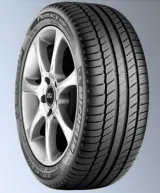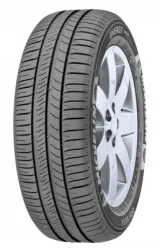
Tests 71 · 1 test Owners 69 · 137 reviews
Best test result: #2 of 20 in 2018 Auto Bild 15 inch Summer Tyre Test (wear)
Relative Score (0–100): the weighted average of the categories below, each 60% road tests and 40% owner reviews (comfort 40/60). Based on 1 + 0 road tests and 137 + 205 owner reviews. How we score
Energy Saver is ahead, 69–63
Both Amazon links then search this exact size.
TireWheelGuide may earn a commission from purchases made through these links.
Tests 71 · 1 test Owners 69 · 137 reviews
Best test result: #2 of 20 in 2018 Auto Bild 15 inch Summer Tyre Test (wear)
Tests – · none yet Owners 62 · 205 reviews
“Sounds as if Aus is rationalising inventory John. Pity because the HP is a good dirt road tyre with stones around. That said the XM2 is also a tough tyre & designed to take knocks that would damage High Performance summer tyres.”
Relative Score per category, 0–100. Open “Why this score” for the tests and owner ratings behind it.
| Source | Energy Saver | Primacy HP |
|---|---|---|
| Professional tests (TWG score) · 1 / – tests | 71 | ≈ 66 (est.) |
| Reviews found online | 67 | 62 |
Energy Saver: 60% × 70.6 + 40% × 67.2 = 69
Primacy HP: 60% × 65.7 (est.) + 40% × 62.4 = 64
No road tests of dry for Primacy HP. The test half is estimated from the owner ratings, as far as owners and testers agree (correlation 0.42).
| Source | Energy Saver | Primacy HP |
|---|---|---|
| Professional tests (TWG score) · 1 / – tests | 69 | ≈ 67 (est.) |
| Reviews found online | 67 | 63 |
Energy Saver: 60% × 69.2 + 40% × 66.5 = 68
Primacy HP: 60% × 66.6 (est.) + 40% × 63.1 = 65
No road tests of wet for Primacy HP. The test half is estimated from the owner ratings, as far as owners and testers agree (correlation 0.55).
| Source | Energy Saver | Primacy HP |
|---|---|---|
| Professional tests (TWG score) | ≈ 68 (est.) | ≈ 66 (est.) |
| Reviews found online | 67 | 58 |
Energy Saver: 40% × 68.5 (est.) + 60% × 67.3 = 68
Primacy HP: 40% × 66.5 (est.) + 60% × 57.6 = 61
No road tests of comfort for Energy Saver. The test half is estimated from the owner ratings, as far as owners and testers agree (correlation 0.20).
No road tests of comfort for Primacy HP. The test half is estimated from the owner ratings, as far as owners and testers agree (correlation 0.20).
| Source | Energy Saver | Primacy HP |
|---|---|---|
| Professional tests (TWG score) · 1 / – tests | 72 | – |
| Reviews found online | ≈ 66 (est.) | – |
Energy Saver: 60% × 72 + 40% × 66.3 (est.) = 70
No owner ratings of noise for Energy Saver. The owner half is the owners’ average (66): owners’ noise ratings barely follow the road tests, so the tests say nothing about how owners would rate it.
| Source | Energy Saver | Primacy HP |
|---|---|---|
| Professional tests (TWG score) · 1 / – tests | 74 | ≈ 65 (est.) |
| Reviews found online | 74 | 61 |
Energy Saver: 60% × 74.4 + 40% × 74.3 = 74
Primacy HP: 60% × 64.6 (est.) + 40% × 61.1 = 63
No road tests of treadwear for Primacy HP. The test half is estimated from the owner ratings, as far as owners and testers agree (correlation 0.36).
| Source | Energy Saver | Primacy HP |
|---|---|---|
| Reviews found online | 64 | 59 |
| Source | Energy Saver | Primacy HP |
|---|---|---|
| Professional tests (TWG score) · 1 / – tests | 75 | – |
| Category | Michelin Energy Saver | Michelin Primacy HP |
|---|---|---|
| Relative Score | 69 | 63 |
| Dry | 69 | 64 |
| Wet | 68 | 65 |
| Comfort | 68 | 61 |
| Noise | 70 | – |
| Treadwear | 74 | 63 |
| Handling (owners) | 64 | 59 |
| Efficiency | 75 | – |
Higher is better. The Relative Score follows your weights below; category scores do not change.
Wet grip starts at “Important”. Treadwear starts at “Neutral” here: road tests measured it for at most one of the two tires, so it rests on owner reviews. Move the sliders and the scores update instantly.
Only one of the two tires has a score here, so this weight changes nothing in the head-to-head.
Only one of the two tires has a score here, so this weight changes nothing in the head-to-head.
Energy Saver
Primacy HP
Only categories both tires have data for count toward the headline score.
Per discipline: the average % of the best tire over every test both tires were in, and how many of those tests each one won. “Different tests” rows compare results from separate tests.
| Discipline | Category | Energy Saver | Primacy HP | Δ | Head-to-head |
|---|---|---|---|---|---|
| Also published by the testers (not in the score) | |||||
| Overall Ranking | Overall | #5/20 2018 Auto Bild 15 inch Summer Tyre Test | #5/6 2010 Autocar Tyre Test - FWD | – | Different tests |
Themes extracted from owner reviews found online — not the opinion of TireWheelGuide.
From Reddit, forums and review threads. Not part of our score
We haven't collected enough community discussion about this tire yet.
Community opinion on the Michelin Primacy HP is divided depending on use case: enthusiasts frequently criticize them for lacking grip compared to dedicated Pilot Sport performance tires, though many appreciate their playful, low-traction slide characteristics on cars like the GR86/BRZ. Owners also note their low rolling resistance and suitability for mild climates, but raise occasional discussions around shoulder cracking with age and their limitation as summer-only rubber.
“You will notice the difference, but if you don't track, autocross, or canyon carve, I wouldn't bother. You don't have to stick with Primacy but it's not worth the PSS. The only reason I would go PSS in that instance, is if the price is similar to Primacy HP (it might actually be similar). If you drive in snow at all I would not go with PSS. Do not go with anything more aggressive than PSS for day to day street driving. There are people who daily drive more aggressive RS3s, RE-71s, ZII Star Specs, etc. but they track/autocross, know the limits, and take it easy around standing water.”
“I noticed these cracks at around spring this year. The car experiences frequent moments of hard driving so I'm thinking of replacing the tires next spring when the car comes out of hibernation as I'm a little worried about how they're going to hold up despite there still being plenty of thread left. The tires are original to the car (2016 Scion FRS). Date code of this one is 4215, but they're all within a couple of weeks or so and they're all in the same condition. Tires and car have 25,000km on them.”
“So long as you’ve got some tread, the stock Primacy HP tires are plenty safe for Bay Area weather all year ‘round. Just don’t drive anywhere that gets real winter weather or freezing temps. I’d avoid trips up to Tahoe in January. And don’t climb Mt. Diablo or Mt. Hamilton when they get their occasional dusting of snow. (I live in upstate NY now, so I’m familiar with tires & winter conditions …but I’m also a Bay Area native.)”
Based on 36 community posts
| Attribute | A · Michelin Energy Saver | B · Michelin Primacy HP |
|---|---|---|
| Category | Summer | Summer |
| Vehicle type | Passenger Car / Crossover | Passenger Car / Crossover |
| Sizes available | 4 | 1 |
| Rim diameters | 15″ – 16″ | 17″ |
| UTQG | — | 240 A A |
Michelin Energy Saver
Michelin Primacy HP
Winner: Michelin Energy Saver — better treadwear, comfort and dry. It leads or ties in every category we score.
Michelin Energy Saver scores 74 vs 63 on treadwear.
Michelin Energy Saver scores 68 vs 61 on comfort.
Michelin Energy Saver scores 69 vs 64 on dry.
Michelin Energy Saver scores 68 vs 65 on wet.
TireWheelGuide may earn a commission from purchases made through these links.
Michelin Energy Saver, 68 vs 65 on our wet score.
Michelin Energy Saver, 69 vs 64 on our dry score.
Michelin Energy Saver, 68 vs 61 on our comfort score.
Michelin Energy Saver, 74 vs 63 on our treadwear score.
Every category score blends two independent signals. 60% comes from professional tire tests (braking distances, lap times, noise measurements), each result compared with every other tire in the same test and newer tests counting more. 40% comes from owner reviews found online, adjusted for how generously each site rates. Both use one scale: the average tested tire gets 70, the best 100. When a tire has only one of the two, the missing half is estimated from the other and the score stays closer to average; with no road test and fewer than five owner reviews it gets no score yet.
Handling is the exception: road tests measure it inside the dry and wet scores, so its own row comes from owner ratings only and starts as less important.
Community buzz from Reddit and forums is shown for context only — it never changes the score. Full methodology