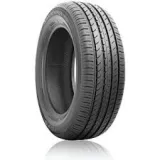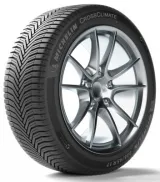
Tests 81 · 13 tests Owners 78 · 121 reviews
Best test result: #1 of 15 in 2019 Summer and All Season Tyre Test (dry handling)
Toyo NanoEnergy R38 looks discontinued: no new owner reviews or road tests in five years and no current EU tyre label.
Relative Score (0–100): the weighted average of the categories below, each 60% road tests and 40% owner reviews (comfort 40/60). Based on 13 + 0 road tests and 121 + 8 owner reviews. How we score
CrossClimate+ is ahead, 82–72
Both Amazon links then search this exact size.
TireWheelGuide may earn a commission from purchases made through these links.
Tests 81 · 13 tests Owners 78 · 121 reviews
Best test result: #1 of 15 in 2019 Summer and All Season Tyre Test (dry handling)
Tests – · none yet Owners 72 · 8 reviews
Relative Score per category, 0–100. Open “Why this score” for the tests and owner ratings behind it.
| Source | CrossClimate+ | NanoEnergy R38 |
|---|---|---|
| Professional tests (TWG score) · 13 / – tests | 94 | ≈ 70 (est.) |
| Reviews found online | 78 | 74 |
CrossClimate+: 60% × 93.9 + 40% × 77.5 = 87
NanoEnergy R38: 60% × 70.4 (est.) + 40% × 73.9 = 72
No road tests of dry for NanoEnergy R38. The test half is estimated from the owner ratings, as far as owners and testers agree (correlation 0.42).
| Source | CrossClimate+ | NanoEnergy R38 |
|---|---|---|
| Professional tests (TWG score) · 13 / – tests | 81 | ≈ 73 (est.) |
| Reviews found online | 81 | 75 |
CrossClimate+: 60% × 80.8 + 40% × 80.6 = 81
NanoEnergy R38: 60% × 73.2 (est.) + 40% × 75.2 = 74
No road tests of wet for NanoEnergy R38. The test half is estimated from the owner ratings, as far as owners and testers agree (correlation 0.55).
| Source | CrossClimate+ | NanoEnergy R38 |
|---|---|---|
| Professional tests (TWG score) · 9 / – tests | 65 | – |
| Reviews found online | 72 | – |
CrossClimate+: 60% × 65 + 40% × 72.3 = 68
| Source | CrossClimate+ | NanoEnergy R38 |
|---|---|---|
| Professional tests (TWG score) · 1 / – tests | 71 | ≈ 69 (est.) |
| Reviews found online | 77 | 69 |
CrossClimate+: 40% × 70.9 + 60% × 77 = 75
NanoEnergy R38: 40% × 68.8 (est.) + 60% × 69.1 = 69
No road tests of comfort for NanoEnergy R38. The test half is estimated from the owner ratings, as far as owners and testers agree (correlation 0.20).
| Source | CrossClimate+ | NanoEnergy R38 |
|---|---|---|
| Professional tests (TWG score) · 9 / – tests | 68 | – |
| Reviews found online | ≈ 66 (est.) | – |
CrossClimate+: 60% × 67.6 + 40% × 66.3 (est.) = 67
No owner ratings of noise for CrossClimate+. The owner half is the owners’ average (66): owners’ noise ratings barely follow the road tests, so the tests say nothing about how owners would rate it.
| Source | CrossClimate+ | NanoEnergy R38 |
|---|---|---|
| Professional tests (TWG score) · 3 / – tests | 83 | ≈ 67 (est.) |
| Reviews found online | 80 | 67 |
CrossClimate+: 60% × 83.2 + 40% × 79.7 = 82
NanoEnergy R38: 60% × 66.6 (est.) + 40% × 66.6 = 67
No road tests of treadwear for NanoEnergy R38. The test half is estimated from the owner ratings, as far as owners and testers agree (correlation 0.36).
| Source | CrossClimate+ | NanoEnergy R38 |
|---|---|---|
| Reviews found online | 72 | 73 |
| Source | CrossClimate+ | NanoEnergy R38 |
|---|---|---|
| Professional tests (TWG score) · 8 / – tests | 74 | – |
| Category | Michelin CrossClimate+ | Toyo NanoEnergy R38 |
|---|---|---|
| Relative Score | 82 | 72 |
| Dry | 87 | 72 |
| Wet | 81 | 74 |
| Snow | 68 | – |
| Comfort | 75 | 69 |
| Noise | 67 | – |
| Treadwear | 82 | 67 |
| Handling (owners) | 72 | 73 |
| Efficiency | 74 | – |
Higher is better. The Relative Score follows your weights below; category scores do not change.
Wet grip starts at “Important”. Treadwear starts at “Neutral” here: road tests measured it for at most one of the two tires, so it rests on owner reviews. Move the sliders and the scores update instantly.
Only one of the two tires has a score here, so this weight changes nothing in the head-to-head.
Only one of the two tires has a score here, so this weight changes nothing in the head-to-head.
Only one of the two tires has a score here, so this weight changes nothing in the head-to-head.
CrossClimate+
NanoEnergy R38
Only categories both tires have data for count toward the headline score.
Themes extracted from owner reviews found online — not the opinion of TireWheelGuide.
| Attribute | A · Michelin CrossClimate+ | B · Toyo NanoEnergy R38 |
|---|---|---|
| Category | All Season | Summer |
| Vehicle type | Passenger Car / Crossover | Passenger Car / Crossover |
| Sizes available | 63 | — |
| Rim diameters | 13″ – 19″ | — |
Michelin CrossClimate+
Toyo NanoEnergy R38
Winner: Michelin CrossClimate+ — better dry, treadwear and wet. Where the Toyo NanoEnergy R38 is ahead, it is by less than 3 points. Toyo NanoEnergy R38 rests on little evidence so far (0 tests, 8 reviews), so read this result as provisional.
Michelin CrossClimate+ scores 87 vs 72 on dry.
Michelin CrossClimate+ scores 82 vs 67 on treadwear.
Michelin CrossClimate+ scores 81 vs 74 on wet.
Michelin CrossClimate+ scores 75 vs 69 on comfort.
TireWheelGuide may earn a commission from purchases made through these links.
Michelin CrossClimate+, 81 vs 74 on our wet score.
Michelin CrossClimate+, 87 vs 72 on our dry score.
Michelin CrossClimate+, 75 vs 69 on our comfort score.
Michelin CrossClimate+, 82 vs 67 on our treadwear score.
Every category score blends two independent signals. 60% comes from professional tire tests (braking distances, lap times, noise measurements), each result compared with every other tire in the same test and newer tests counting more. 40% comes from owner reviews found online, adjusted for how generously each site rates. Both use one scale: the average tested tire gets 70, the best 100. When a tire has only one of the two, the missing half is estimated from the other and the score stays closer to average; with no road test and fewer than five owner reviews it gets no score yet.
Handling is the exception: road tests measure it inside the dry and wet scores, so its own row comes from owner ratings only and starts as less important.
Community buzz from Reddit and forums is shown for context only — it never changes the score. Full methodology