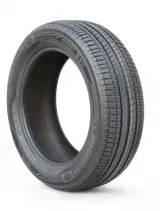
Tests – · none yet Owners 40 · 5 reviews
Head-to-head
Updated
Michelin Energy EV vs Hankook Ventus Prime 4 — Compared
Relative Score (0–100): the weighted average of the categories below, each 60% road tests and 40% owner reviews. Based on 0 + 13 road tests and 5 + 2,504 owner reviews. How we score
Ventus Prime 4 is ahead, 77–50
Add your size for an exact match
/R
Both Amazon links then search this exact size.
TireWheelGuide may earn a commission from purchases made through these links.
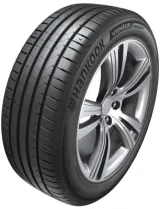
Tests 77 · 13 tests Owners 73 · 2,504 reviews
Best test result: #1 of 21 in 2022 Auto Bild Summer Tyre Test (dry handling)
“Simbolul cu mașina și fulgerul de pe Hankook Ventus Prime 4 arată că anvelopa e compatibilă și cu mașini electrice (EV), nu că e destinată exclusiv lor. Poate fi folosită fără probleme și pe mașini cu motor termic.”
Category by category
Relative Score per category, 0–100. Open “Why this score” for the tests and owner ratings behind it.
-
51
Dry
Ventus Prime 4 +2980Why this score
Source Energy EV Ventus Prime 4 Professional tests (TWG score) · – / 11 tests ≈ 57 (est.) 84 Reviews found online 42 76 Energy EV: 60% × 57.3 (est.) + 40% × 41.9 = 51
Ventus Prime 4: 60% × 83.7 + 40% × 75.6 = 80
No road tests of dry for Energy EV. The test half is estimated from the owner ratings, as far as owners and testers agree (correlation 0.40).
-
55
Wet
Ventus Prime 4 +2378Why this score
Source Energy EV Ventus Prime 4 Professional tests (TWG score) · – / 12 tests ≈ 59 (est.) 80 Reviews found online 50 76 Energy EV: 60% × 58.9 (est.) + 40% × 50.3 = 55
Ventus Prime 4: 60% × 79.8 + 40% × 76.2 = 78
No road tests of wet for Energy EV. The test half is estimated from the owner ratings, as far as owners and testers agree (correlation 0.56).
-
55
Comfort
Ventus Prime 4 +1570Why this score
Source Energy EV Ventus Prime 4 Professional tests (TWG score) · – / 1 tests ≈ 64 (est.) 70 Reviews found online 41 71 Energy EV: 60% × 64.3 (est.) + 40% × 41.3 = 55
Ventus Prime 4: 60% × 70.3 + 40% × 70.5 = 70
No road tests of comfort for Energy EV. The test half is the tested tires’ average (69): owners’ comfort ratings barely follow the road tests.
-
–
Noise
No comparison61Why this score
Source Energy EV Ventus Prime 4 Professional tests (TWG score) · – / 8 tests – 58 Reviews found online – ≈ 67 (est.) Ventus Prime 4: 60% × 57.6 + 40% × 67.3 (est.) = 61
No owner ratings of noise for Ventus Prime 4. The owner half is the owners’ average (67): owners’ noise ratings barely follow the road tests, so the tests say nothing about how owners would rate it.
-
42
Treadwear
Ventus Prime 4 +3173Why this score
Source Energy EV Ventus Prime 4 Professional tests (TWG score) · – / 5 tests ≈ 53 (est.) 76 Reviews found online 25 69 Energy EV: 60% × 53.1 (est.) + 40% × 25 = 42
Ventus Prime 4: 60% × 76.4 + 40% × 69 = 73
No road tests of treadwear for Energy EV. The test half is estimated from the owner ratings, as far as owners and testers agree (correlation 0.31).
-
43
Handling (owners)
Ventus Prime 4 +3174Why this score
Source Energy EV Ventus Prime 4 Reviews found online 43 74
Scores at a glance
| Category | Michelin Energy EV | Hankook Ventus Prime 4 |
|---|---|---|
| Relative Score | 50 | 77 |
| Dry | 51 | 80 |
| Wet | 55 | 78 |
| Comfort | 55 | 70 |
| Noise | – | 61 |
| Treadwear | 42 | 73 |
| Handling (owners) | 43 | 74 |
Higher is better. The Relative Score follows your weights below; category scores do not change.
Weight the categories that matter to you
Wet grip starts at “Important”. Treadwear starts at “Neutral” here: road tests measured it for at most one of the two tires, so it rests on owner reviews. Move the sliders and the scores update instantly.
Important
NotLessNeutralImportantMost
Important
NotLessNeutralImportantMost
Less important
NotLessNeutralImportantMost
Less important
NotLessNeutralImportantMost
Only one of the two tires has a score here, so this weight changes nothing in the head-to-head.
Neutral
NotLessNeutralImportantMost
Less important
NotLessNeutralImportantMost
Recomputed
Headline score
50
/ 100
Energy EV
77
/ 100
Ventus Prime 4
Only categories both tires have data for count toward the headline score.
Pros, cons & observations
Themes extracted from owner reviews found online — not the opinion of TireWheelGuide.
Tire A Energy EV
Pros
- Commendable grip levels in both dry and wet conditions
- Effective contribution to vehicle range maximization
- Performance comparable to higher-tier performance tires despite eco-focused design
Cons
- High susceptibility to sidewall damage and punctures
- Premature aging, including cracking and block degradation
- Rapid tread wear on front-wheel-drive configurations
Tire B Ventus Prime 4
Pros
- Exceptional wet and dry grip providing high confidence
- Significantly reduced road noise and smooth, quiet ride quality
- Competitively priced offering great value compared to top-tier premium brands
Cons
- Accelerated tread wear reported by some users, leading to shorter overall tire life
- Noticeable decrease in wet traction and grip as the tread wears down past the halfway mark
- Stiffer sidewalls can translate to a firmer ride or reduced comfort on rough surfaces
What real owners are saying
From Reddit, forums and review threads. Not part of our score
Tire A
Michelin Energy EV
We haven't collected enough community discussion about this tire yet.
Tire B
Positive
Hankook Ventus Prime 4
Community opinion on the Hankook Ventus Prime 4 is largely positive, with drivers viewing it as a comfortable, quiet, and capable touring tire. Users frequently praise its strong dry and wet performance alongside its compelling price-to-performance ratio compared to premium alternatives like Michelin. Some uncertainties exist regarding long-term tread wear and slight fuel economy impacts, but owners generally report satisfactory everyday reliability.
r/tires
·3 upvotes ·2026-10-09
“Found a cut on one of my tires, is it 100% cooked? Three month old Hankook Ventus Prime 4, covered less than 600miles. Found a small cut on the front right one. It is holding air fine. I will go to a tire shop to get checked asap, but chances that it’s ok? And what could have caused it? Hitting a curb? Thank you in advance!”
r/AutomobileRO
·2 upvotes ·2025-03-23
“Simbolul cu mașina și fulgerul de pe Hankook Ventus Prime 4 arată că anvelopa e compatibilă și cu mașini electrice (EV), nu că e destinată exclusiv lor. Poate fi folosită fără probleme și pe mașini cu motor termic.”
teslamotorsclub.com
·2023-09-01
“MOT coming up on the 29th and the rear tyres won't make it. Front tyres have a bit of wear left but I'm wondering if I should do all four now or the rears now and then the fronts sometime in about 6 months or so. Better deals on 4 tyres though ... but then I'd be throwing away 2 decent tyres with some use still in them so ... Also, looking on KiwkFit... any reason why I wouldn't go for the Ventus Prime 4s over the Michelins?”
Top themes
#value for money#comfort and low noise#wet and dry grip#comparison with premium brands#tread longevity questions#touring versus sports handling
Based on 41 community posts
Specs side by side
| Attribute | A · Michelin Energy EV | B · Hankook Ventus Prime 4 |
|---|---|---|
| Category | Summer | Summer |
| Vehicle type | Passenger Car / Crossover | — |
| Sizes available | 1 | 66 |
| Rim diameters | 16″ | 15″ – 20″ |
Which one should you actually buy?
50
/ 100
Michelin Energy EV
77
/ 100
Hankook Ventus Prime 4
Winner: Hankook Ventus Prime 4 — better treadwear, handling and dry. It leads or ties in every category we score. Michelin Energy EV rests on little evidence so far (0 tests, 5 reviews), so read this result as provisional.
Pick tire B
You want the longest tread life
Hankook Ventus Prime 4 scores 73 vs 42 on treadwear.
Pick tire B
You enjoy sharp, responsive handling
Hankook Ventus Prime 4 scores 74 vs 43 on handling.
Pick tire B
You want the most grip on dry roads
Hankook Ventus Prime 4 scores 80 vs 51 on dry.
Pick tire B
Your priority is wet-weather safety
Hankook Ventus Prime 4 scores 78 vs 55 on wet.
Tire A · Michelin Energy EV
Tire B · Hankook Ventus Prime 4
TireWheelGuide may earn a commission from purchases made through these links.
Energy EV or Ventus Prime 4?
Which is better in the wet, Energy EV or Ventus Prime 4?
Hankook Ventus Prime 4, 78 vs 55 on our wet score.
Which grips better on dry roads, Energy EV or Ventus Prime 4?
Hankook Ventus Prime 4, 80 vs 51 on our dry score.
Which is more comfortable, Energy EV or Ventus Prime 4?
Hankook Ventus Prime 4, 70 vs 55 on our comfort score.
Which lasts longer, Energy EV or Ventus Prime 4?
Hankook Ventus Prime 4, 73 vs 42 on our treadwear score.
How do we compare tires?
Every category score blends two independent signals. 60% comes from professional tire tests (braking distances, lap times, noise measurements), each result compared with every other tire in the same test and newer tests counting more. 40% comes from owner reviews found online, adjusted for how generously each site rates. Both use one scale: the average tested tire gets 70, the best 100. When a tire has only one of the two, the missing half is estimated from the other and the score stays closer to average; with no road test and fewer than five owner reviews it gets no score yet.
Handling is the exception: road tests measure it inside the dry and wet scores, so its own row comes from owner ratings only and starts as less important.
Community buzz from Reddit and forums is shown for context only — it never changes the score. Full methodology