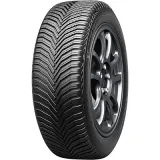
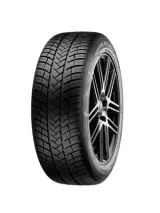
Best test result: #1 of 15 in 2022 Auto Bild All Season Tyre Test (dry braking)
“I have the 235 that is a little higher load rating (105 vs 103 stock and 99 for 225). I'm probably getting about a 10% range reduction, but worth it to me for the improved handling and lower braking distance. I work from home and I charge to 90% about once a week unless taking a longer drive. If I did a lot of longer trips it might be an issue, but I am very happy with these tires.”
From Reddit, forums and review threads. Not part of our score
Tire A
Michelin CrossClimate 2
Positive
The community overwhelmingly praises the Michelin CrossClimate 2 for its exceptional snow, ice, and wet-weather traction, often describing it as an ideal all-weather tire. While many drivers report a quiet, comfortable ride and solid durability, some users note potential downsides including reduced fuel or battery efficiency, road noise on certain surfaces, and premium pricing. A few commenters also point out that the tire may be overkill for regions without significant winter weather.
#Snow and ice traction#Wet handling and hydroplaning#Road noise and comfort#Fuel economy and range#Tread wear and longevity#Premium price point#Directional tread design
Based on 762 community posts
Tire B
Vredestein Wintrac Pro
We haven't collected enough community discussion about this tire yet.
Specs side by side
Attribute
A · Michelin CrossClimate 2
B · Vredestein Wintrac Pro
Category
All Season
Winter
Vehicle type
Passenger Car / Crossover
Passenger Car / Crossover
Sizes available
92
119
Rim diameters
15″ – 21″
17″ – 22″
Tread depth
9 - 10/32″
—
UTQG
640 B A
—
Treadwear warranty
60,000 mi
—
Sidewall
Black Side Wall
—
Max pressure
50 - 51 psi
—
Which one should you actually buy?
84
/ 100
Michelin CrossClimate 2
74
/ 100
Vredestein Wintrac Pro
Winner: Michelin CrossClimate 2 — better treadwear, dry and noise. It leads or ties in every category we score.
Pick tire AYou want the longest tread life
Michelin CrossClimate 2 scores 80 vs 63 on treadwear.
Every category score blends two independent signals. 60% comes from professional tire tests (braking distances, lap times, noise measurements), each result compared with every other tire in the same test and newer tests counting more. 40% comes from owner reviews found online, adjusted for how generously each site rates. Both use one scale: the average tested tire gets 70, the best 100. When a tire has only one of the two, the missing half is estimated from the other and the score stays closer to average; with no road test and fewer than five owner reviews it gets no score yet.
Community buzz from Reddit and forums is shown for context only — it never changes the score.