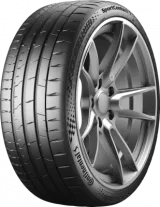
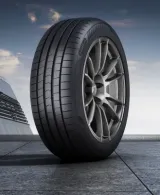
Continental SportContact 7 vs Goodyear Eagle F1 Asymmetric 6 — Compared
Relative Score (0–100): the weighted average of the categories below, each 60% road tests and 40% owner reviews (comfort 40/60). Based on 22 + 31 road tests and 1,642 + 1,946 owner reviews. How we score
Best test result: #1 of 20 in 2026 Autobild Summer Tyre Test (wear)
“I've had the Eagle F1 Asymmetric 6 (235/45/18). They were really sturdy, comfort was super bad with them and I sold them for half the price. These are sport tyres, you do not need them.”
Category by category
Relative Score per category, 0–100. Open “Why this score” for the tests and owner ratings behind it.
Key facts
In 8 tests that measured dry braking for both, SportContact 7 won 6 and Eagle F1 Asymmetric 6 won 0 (average 100% vs 97% of the best).
In 8 tests that measured straight aquaplaning for both, SportContact 7 won 5 and Eagle F1 Asymmetric 6 won 3 (average 96% vs 94% of the best).
In 8 tests that measured wet braking for both, SportContact 7 won 4 and Eagle F1 Asymmetric 6 won 3 (average 97% vs 95% of the best).
In 7 tests that measured rolling resistance for both, SportContact 7 won 3 and Eagle F1 Asymmetric 6 won 2 (average 86% vs 87% of the best).
In 6 tests that measured dry handling for both, SportContact 7 won 6 and Eagle F1 Asymmetric 6 won 0 (average 100% vs 99% of the best).
No owner ratings of noise for SportContact 7 or Eagle F1 Asymmetric 6. The owner half is the owners’ average (66): owners’ noise ratings barely follow the road tests, so the tests say nothing about how owners would rate it.
Fuel Consumption (% of best) · 1 shared test · wins 1–0
96%
95%
Rolling Resistance (% of best) · 7 shared tests · wins 3–2
86%
87%
Scores at a glance
Continental SportContact 7 vs Goodyear Eagle F1 Asymmetric 6: scores by category (0–100)
Category
Continental SportContact 7
Goodyear Eagle F1 Asymmetric 6
Relative Score
83
89
Dry
96
94
Wet
93
92
Comfort
67
79
Noise
62
82
Treadwear
68
86
Handling (owners)
89
90
Efficiency
72
71
Higher is better. The Relative Score follows your weights below; category scores do not change.
Weight the categories that matter to you
Wet grip and treadwear start at “Important” — the two things buyers rank highest. Move the sliders and the scores update instantly.
Important
NotLessNeutralImportantMost
Important
NotLessNeutralImportantMost
Less important
NotLessNeutralImportantMost
Less important
NotLessNeutralImportantMost
Important
NotLessNeutralImportantMost
Less important
NotLessNeutralImportantMost
Not important
NotLessNeutralImportantMost
Recomputed
Headline score
83
/ 100
± 5
SportContact 7
89
/ 100
± 4
Eagle F1 Asymmetric 6
The professional test results behind the scores
Per discipline: the average % of the best tire over every test both tires were in, and how many of those tests each one won. “Different tests” rows compare results from separate tests.
In the overall rankings of 8 tests that ran both, Continental SportContact 7 finished ahead 6 times and Goodyear Eagle F1 Asymmetric 6 2 times.
Discipline
Category
SportContact 7
Eagle F1 Asymmetric 6
Δ
Head-to-head
Dry
Dry
100%
96%
+4.1
1–0 in 1 shared testNewest: 2023 AUTO Straßenverkehr 2023 Summer Tire Test R18 · 225/40R18
From Reddit, forums and review threads. Not part of our score
Tire A
Continental SportContact 7
Positive
The community generally regards the SportContact 7 as an excellent ultra-high-performance tire, praised for exceptional dry and wet grip, direct steering, quick warm-up, and good rim protection. Many rank it at or above the Michelin PS4S and ahead of the PS5 and Goodyear Asymmetric 6 for outright performance. The main criticisms are fast tread wear (often about 10–15k miles), low starting tread depth, softer sidewalls, some tramlining and noise, and poor durability on track.
#Exceptional grip#Fast tread wear#Comparison with PS4S#Wet performance#Track durability#Comfort and noise#Rim protection#PremiumContact 7 alternative
Based on 115 community posts
Tire B
Goodyear Eagle F1 Asymmetric 6
Mixed
The Eagle F1 Asymmetric 6 is widely regarded as a top-tier UHP summer tire, with strong dry performance, good rim protection and favorable pricing, and some owners are loyal repeat buyers. Criticisms include harsh comfort for some drivers, weak cold and wet performance in one Swedish test (1/5), wear on track use, and isolated vibration complaints. Many posts are comparison-shopping against the Michelin PS5, Continental SC7 and Goodyear's own alternatives.
#UHP dry performance#Comparison with Michelin PS5#Ride comfort concerns#Wear and durability#Cold and wet grip#BMW star-rated version#Pricing and value#EV and fitment questions
Based on 30 community posts
Specs side by side
Attribute
A · Continental SportContact 7
B · Goodyear Eagle F1 Asymmetric 6
Category
Summer
Summer
Vehicle type
Passenger Car / Crossover
Passenger Car / Crossover
Sizes available
123
130
Rim diameters
18″ – 24″
17″ – 23″
Tread depth
8 - 9/32″
7 - 9/32″
UTQG
240 AA A
260 - 300 AA A
Treadwear warranty
—
30,000 mi
Sidewall
Black Side Wall
Black Side Wall - Vertical Serrated Band
Max pressure
50 - 51 psi
50 - 51 psi
Sizes in common
64
64
Which one should you actually buy?
83
/ 100
Continental SportContact 7
89
/ 100
Goodyear Eagle F1 Asymmetric 6
Winner: Goodyear Eagle F1 Asymmetric 6 — better noise, treadwear and comfort. Where the Continental SportContact 7 is ahead, it is by less than 3 points.
Pick tire BYou want a quieter cabin
Goodyear Eagle F1 Asymmetric 6 scores 82 vs 62 on noise.
Pick tire BYou want the longest tread life
Goodyear Eagle F1 Asymmetric 6 scores 86 vs 68 on treadwear.
Pick tire BYou want the most comfortable ride
Goodyear Eagle F1 Asymmetric 6 scores 79 vs 67 on comfort.
Pick tire AYour priority is dry braking
Continental SportContact 7 won 6 of 8 shared dry braking tests.
Every category score blends two independent signals. 60% comes from professional tire tests (braking distances, lap times, noise measurements), each result compared with every other tire in the same test and newer tests counting more. 40% comes from owner reviews found online, adjusted for how generously each site rates. Both use one scale: the average tested tire gets 70, the best 100. When a tire has only one of the two, the missing half is estimated from the other and the score stays closer to average; with no road test and fewer than five owner reviews it gets no score yet.
Handling is the exception: road tests measure it inside the dry and wet scores, so its own row comes from owner ratings only and starts as less important.
Community buzz from Reddit and forums is shown for context only — it never changes the score. Full methodology